Ejaculation was not, for me, a matter of pleasure so much as verification—an imprecise proof that I had not yet broken. The difficulty was that the proof referred to no agreed-upon standard. I had never defined what condition would count as “unbroken,” never established an endpoint against which the claim could be measured. And yet I continued to verify. With repetition, the act altered its function. What began as confirmation became so automated that confirmation was no longer required. Little intention remained in it. I was, simply, repeating.
I retain the sensation that I am trying to land. Whether I am actually decelerating is another matter. It is possible that I have mistaken a steady orbit for a reduction in speed. “Soft landing” has the quality of a phrase imported from elsewhere, a term whose assurance exceeds my experience of it by a small but persistent margin.
In the morning I inventory the body: pain, dullness, minor irregularities. These present themselves as residues of the previous night’s activity, reliably there. I drink coffee and let the bitterness settle in the mouth while attempting to reconstruct the route—how it began, the point at which return became unlikely, where it ended. The particulars dissolve almost at once, leaving behind a single pattern. Repetition tends to level memory.
When I was frequenting encounter cafés, the range of choice appeared limitless. In practice, each choice returned me to the same place. Similar voices, similar gestures, similar silences. Individual episodes gradually lost their distinctness within the cycle. It may be that I was not choosing people so much as tracing, again and again, the path that led to a familiar result.
Medication made the body more obedient. Time, too, could be managed to a degree. The impulse, however, did not submit; if anything, it acquired sharper edges. The feeling of control became one more component of the system it purported to regulate. I called this efficiency, while recognizing, at the same time, something in it that resembled a premonition of failure.
There exists only the assumption that I am slowing down. No reliable measure confirms it. More often I suspect that I am gliding at a constant altitude. Even so, I am reluctant to relinquish the word “landing.” Without it, I would be unable to posit an end to the motion at all.
On reflection, there was never a destination to begin with. There was only motion, to which I later assigned the idea of an endpoint in order to make it legible. Even so, I persist in believing that some final destination must exist, and I continue to search for its location. I attempt to decelerate toward a terminus that is not there. The structure of this effort contains a certain absurdity.
At intervals—brief, discontinuous—there are moments that approximate sobriety. Nothing is being done, and nothing seems lacking. They do not last. The system reasserts itself and draws me back into its orbit. Still, the fact of those moments, however fleeting, serves as the only available index.
A soft landing may be less a state than a technique, or even merely the name for a series of attempts. Not an achievement but a process sustained over time. In that sense, its remaining unaccomplished is not necessarily failure.
Within an unending repetition, I try to introduce a slight deviation of course. That minimal drift is, for now, what I mean by deceleration, and also, perhaps, the nearest thing to the prospect of landing.
There is another form of existence: to sever oneself—cleanly, without residue—from the body of society.
Not retreat, but rupture. Not resignation, but refusal.
The world names it “retirement.”
In truth, it is exile by one’s own hand: a deliberate abandonment of the herd, in order to live alone—answerable to nothing but one’s own taste.
No longer does one crawl before the idol of usefulness.
No longer does one beg for meaning by serving the needs of others.
One turns away—coldly—from this economy of justification.
Instead, one founds oneself within the so-called culture of living: a domain that does not serve, does not justify, does not redeem.
It simply is—a sovereign territory of form, sensation, and self-creation.
Production. Reproduction.
These are the labors of the species—mechanisms of its blind will to persist.
Let them belong to the many.
What remains—what is higher—is without purpose.
It does not contribute. It does not advance. It does not explain itself.
It is the excess of life over necessity: the refinement of existence into something willed for its own sake.
This is what the timid call “play.”
But play, in its pure form, is not trivial—it is tyrannical.
It obeys no law beyond its own intensity.
It exists because it must exist, because it affirms itself.
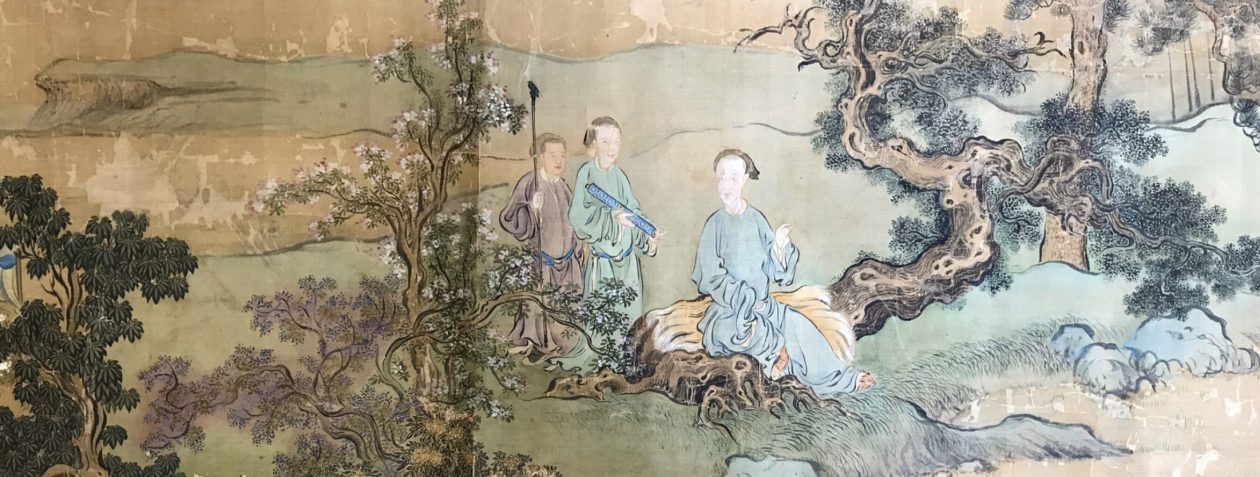
The cultivated classes of the Edo period once knew this, and called it yūgei—disciplined frivolity, perfected uselessness.
Art belongs here. Ritual belongs here. Even the most fleeting amusements—yes, even something like Pokémon GO—can, in their purified form, be transfigured into this domain.
I spiraled down a path of addiction, starting with gambling and progressing to addiction to Filipino pubs, alcohol, and dating cafes. With the exception of my addiction to sex, I was able to break free from my addictions through hitting rock bottom, returning to society and becoming indifferent to my former targets. I became a believer in the “bottomed out” approach, which involves pouring all of one’s money, time, and physical energy into facing one’s addiction head on. I believed that this approach would work for overcoming my final addiction, and by October of 2021, I had converted to this “bottomed out” approach.
I devoted all of my energy to pursuing my own methodology, based on my own experience, and aimed for the final destination of “bottoming out.” I locked myself in the Kabukicho entertainment district, doing as I pleased, and felt that even if I barely survived, it would be better than nothing. However, this way of thinking itself was foolish, reckless, and perhaps even a biological, fundamental instinct of a male to contain the addiction of sex. It was inappropriate to believe that I could overcome this addiction by sheer force. Ultimately, my last addiction felt like a bottomless swamp, with the bottom seemingly far away, or maybe the concept of a bottom was not appropriate at all. I was drawn to a fleeting desire for a state of being that didn’t exist. Such endless delusions and intense desires are surely a type of mental illness.
But, fortunately, I was able to avoid a complete mental breakdown and loss of willpower that would have led to homelessness and instead interacted with young people without developing fatal troubles. I must have been lucky. Although I didn’t reach the sensation of bottoming out, I was left with a feeling of “I’ve had enough.” I continued to run through the night streets in search of the orgasm of my heart, even as I suffered from prostatitis and almost collapsed from exhaustion. This was like continuously stepping on the accelerator pedal, even as the engine burned out in a car. The feeling still smolders deep inside me.